

Healthcare and healthcare access in 2026 is moving through a period of sustained structural change.
Costs continue to rise. Coverage is becoming less stable for large segments of the population. Demand is increasing across both physical and behavioral health. At the same time, expectations around how care should be accessed and delivered have shifted in ways the system has not fully absorbed.
In response, healthcare has experimented. Digital platforms promised to close the gap. Retail clinics expanded into underserved zip codes. Telehealth removed the commute. Each wave arrived with the same promise: that proximity to care—physical or virtual—would translate into care received.
It hasn't.
For the 120 million Americans living without reliable healthcare access, no single barrier is responsible. It is distance, cost, coverage and continuity—and the structural conditions that make navigating a fragmented system feel impossible before anyone even picks up the phone. Solving for one without addressing the others moves the problem, not the person. Adding channels did not change that calculus. It added options for people who already had them.
The system is not more accessible. It is more visible. And visibility is not the same thing.
According to McKinsey's What to Expect in US Healthcare in 2026 and Beyond, margin pressure, evolving care models, and accelerating technology adoption will continue to reshape the system over the coming years. These shifts are not isolated. They are connected, and they reinforce one another.
Healthcare has made meaningful progress expanding its footprint. It has not yet closed the gap between presence and care actually received.
The trends shaping 2026 make that gap impossible to ignore.
The most visible force affecting healthcare is cost. But cost does not rise in isolation—it rises when access breaks down. The more structural issue is how that cost is distributed, who absorbs it, and who can no longer reliably reach care in the first place.
Healthcare spending has reached approximately $5.6 trillion annually, and employers are projecting healthcare cost increases of 8–9% in 2026—one of the highest growth rates in over a decade, according to the EY Healthcare Sector Outlook 2026. The policy environment is accelerating the pressure. According to McKinsey, an estimated nine to ten million people are projected to lose Medicaid coverage by 2026–27, with another six to seven million expected to disenroll in the years that follow. The expiration of enhanced ACA subsidies is expected to push an additional nine to ten million people out of the individual insurance market.
These are not projections about a distant future. They are changes already in motion.
And when coverage erodes, access erodes with it. Employers see a workforce with uneven coverage and more complex health profiles. Universities see students arriving with gaps in insurance. Health systems absorb higher levels of uncompensated care—amounting to approximately $50 billion annually—while managing shrinking margins.
When coverage becomes less stable, access becomes more uneven. When access becomes more uneven, care is delayed. And when care is delayed, both cost and complexity increase. The cycle is not theoretical. It is already visible in claims data, ER utilization rates, and the downstream burden landing on every organization that touches the healthcare system.
This is why cost control is no longer limited to managing plans or negotiating rates. Employers are increasingly expected to demonstrate measurable return on investment—through reduced claims, improved productivity, and lower downstream utilization. Cost is no longer just a trend. It is a performance expectation.
This is the shift underway. Cost is no longer just something to manage. It is something organizations are expected to prove.
And the organizations that will lead that proof are the ones investing in access—not just as a benefit, but as a cost strategy.
Much of the sustained pressure on the healthcare system can be traced back to the prevalence of chronic disease.
According to the CDC, three out of four American adults live with at least one chronic condition, and more than half manage multiple conditions simultaneously. This is not limited to older populations—among adults aged 18 to 34, 60% are already living with at least one chronic condition. Chronic diseases account for the vast majority of the nation's $4.9 trillion in annual healthcare costs and are the leading cause of death and disability in the United States.
Chronic disease changes the nature of care. Instead of discrete interactions, patients require ongoing management, monitoring, and adjustment. When that continuity is disrupted, conditions progress silently until they require more intensive and expensive intervention. Fifty percent of unmanaged chronic conditions will ultimately escalate to emergencies, a pattern that drives significant avoidable cost across the system.
The impact spreads across the system. Employers see higher healthcare spend and reduced productivity. Universities see health-related disruptions that influence retention. Health systems experience sustained demand that strains capacity.
Prevention has become a central strategy in response to this trend, but prevention depends on more than identifying risk. It depends on the ability to act on that information in real time.
If care is not available when it is needed, early detection does not change the outcome.
Without consistent access to care, chronic disease management remains reactive, and costs continue to rise.
The effects of chronic disease are particularly visible in pharmacy spend.
According to the UnitedHealthcare 2026 Health Trends Report, specialty medications now account for approximately 55% of total pharmacy spending, despite representing less than 2% of overall prescriptions. Pharmacy costs rose 11% in 2025 with similar projections for 2026, with one in every four employer healthcare dollars now spent on pharmacy.
Originally developed for diabetes, GLP‑1s are now widely used for weight management and related conditions. Tens of millions of Americans now qualify for GLP‑1 treatment, and adoption has nearly doubled between 2023 and 2025. For employers and payors, this creates more variability and less predictability in total spend.
Traditional cost management focuses on claims after they occur. Increasingly, those costs are determined much earlier based on whether conditions are identified and treated before they escalate. As a result, pharmacy is no longer treated as a standalone cost category. Organizations are beginning to align medical and pharmacy strategies more closely, recognizing that managing chronic conditions upstream is one of the few levers available to reduce total cost of care.
This is why cost management is moving upstream, where conditions can be addressed before they become more complex and more expensive to treat.

At the same time, behavioral health has become one of the fastest-growing drivers of demand.
According to the UnitedHealthcare 2026 Health Trends Report, mental health costs have increased by 117% since 2019, and for the first time, mental health conditions now rank among the top drivers of employer healthcare spend, carrying a 10.9% year-over-year cost increase. Demand continues to rise, with an estimated one in four Americans expected to access behavioral health services in 2026.
Supply has not kept pace. According to UnitedHealthcare, more than one-third of Americans live in areas facing a shortage of mental health professionals. Average wait times for someone in crisis are eight weeks. Employers see the consequences directly—200 million workdays are missed annually due to depression alone.
The impact extends across every sector. Universities report that mental health is a leading factor affecting student retention and academic performance. Health systems face sustained demand and limited capacity to respond.
Telehealth has expanded access, particularly for behavioral health, which now represents the majority of virtual visits. But access alone has not solved the issue. Care remains fragmented. Physical and behavioral health are still frequently treated separately, which increases the likelihood of delayed or incomplete care.
Mental health is no longer a secondary issue. It is a primary driver of whether the system can keep up with demand.
Expanding access without integration continues to add volume without improving outcomes.
Healthcare delivery has expanded beyond traditional facilities into workplaces, campuses, community environments, and homes.
Outpatient and ambulatory care settings are now among the fastest-growing segments of healthcare, according to the EY Healthcare Sector Outlook 2026, reflecting both cost pressures and patient preference. But as access points have multiplied, so has complexity.
Patients often move between multiple settings to resolve a single issue. A virtual consultation may lead to an in-person visit, which may require a further referral. Each step advances care, but few resolve it completely.
As this fragmentation has increased, organizations are beginning to respond. Employers and health systems are reevaluating the growing number of point solutions and vendors across their healthcare ecosystems, and there is a clear shift toward consolidation, according to the Business Group on Health. The focus is moving toward partners that can deliver measurable outcomes across access, utilization, and cost, rather than adding more disconnected solutions.
In response to fragmentation and capacity constraints, hybrid healthcare is beginning to take shape as a more effective model.
Hybrid care combines physical environments, clinician interaction, and digital tools into a unified experience. It reduces the number of steps required to resolve care and shortens the distance between need and treatment.
This approach is gaining traction across sectors. Employers are bringing care into the workplace to reduce claims costs, absenteeism and improve productivity. Universities are placing care closer to where students live and study. Health systems are extending services into communities to expand capacity beyond traditional facilities.
The goal is not simply to expand access.
It is to make access actionable.
Hybrid care reflects a shift from availability to delivery. It also reflects a shift in how healthcare solutions are evaluated. Organizations are increasingly holding these models accountable for measurable performance, including reductions in downstream utilization, improved engagement, and overall cost impact. Access is no longer the endpoint. Outcomes are.
Artificial intelligence is being adopted rapidly across healthcare—not as a single solution, but as a layer that spans administrative, clinical, and operational functions.
According to McKinsey's Generative AI in Healthcare: Adoption Matures as Agentic AI Emerges, approximately half of healthcare organizations have already implemented generative AI, up from just 25% in 2023, and adoption continues to accelerate. The EY Healthcare Sector Outlook 2026shows that AI adoption in healthcare has grown roughly three times faster than the broader economy since 2023.
AI is being used to automate administrative processes such as prior authorization and billing. It is supporting clinical workflows through documentation and imaging analysis. It is enabling patient engagement through triage and outreach. At the population level, it is helping identify high-risk individuals earlier, enabling intervention before conditions escalate into higher-cost events.
The next phase moves beyond assistance toward coordination. McKinsey highlights growing interest in multi-agent workflows—agentic AI systems capable of managing processes across multiple steps in the care journey.
This shift matters because it directly affects capacity. Healthcare faces a growing gap between demand and available resources. AI has the potential to extend the system's ability to respond.
Its effectiveness, however, depends on integration. Without connection to care delivery workflows, even advanced technology cannot improve outcomes.
AI is not solving access on its own. It is only effective when it is embedded directly into care delivery.
Across all these trends, one constraint remains constant.
Demand for care continues to outpace the available workforce. While the AAMC Workforce Projections Report projects a shortage of up to 124,000 physicians by 2036, that estimate reflects current utilization patterns. If the millions of Americans who currently lack adequate access to care were fully served, the effective workforce gap would be substantially larger and is often estimated to exceed 200,000 clinicians. Combined with 63% of clinicians already reporting burnout at the highest levels ever recorded and nearly half of all practicing physicians approaching retirement age, the pipeline pressure is significant.
This reality is reflected in wait times, access challenges, and uneven distribution of care. Today, 80% of U.S. counties qualify as healthcare deserts, and the average wait time to see a doctor runs 31 to 90 days.
Organizations experience these limitations differently. Health systems see it in staffing shortages and ED strain. Employers see it in delayed care and lost productivity. Universities experience it through extended wait times and limited service capacity.
The current model does not scale.

At the same time, expectations around care have shifted.
Patients increasingly expect healthcare to be immediate, simple, and accessible without unnecessary friction. When those expectations are not met, care is often delayed or avoided. Half of all Americans currently delay care, with 120 million doing so specifically due to lack of adequate access.
That delay has measurable consequences. Conditions progress, treatment becomes more complex, and costs increase. Emergency departments—now 12 times more expensive than alternative care settings—absorb $168 billion annually in unnecessary and avoidable visits as patients use the ER as a substitute for accessible primary care.
Delayed care is more expensive care.
As healthcare becomes more digital, a foundational assumption is being exposed: that expanded access is the same as equitable access.
It is not.
Research published in Health Affairs shows that disparities persist across digital healthcare access. Effective access models must work regardless of whether a patient has a smartphone, a reliable internet connection, or the digital fluency to navigate a patient portal.
One in five Americans don't have a viable broadband connection for a video call to access digital health.
Access that depends on digital readiness will continue to leave the highest-need populations behind.
Taken together, these trends point to a clear pattern.
Healthcare is under increasing pressure to deliver. It has tried to expand access. It has introduced new modalities, new technologies, and new delivery environments.
But it has not solved the problem.
Demand remains higher than supply. Patients still can't enter or navigate the system easily and still struggle to complete care within it. Care is still being delayed. There remains a gap between the access being introduced and patient resolutions, and this is where cost increases, complexity builds, and outcomes are determined.
Addressing this challenge requires connecting access directly to care delivery.
The system needs models that can deliver care in real time rather than directing patients to additional touchpoints. It needs infrastructure that works for every patient—not just those who are already connected.
The OnMed CareStation™ is designed within this framework.
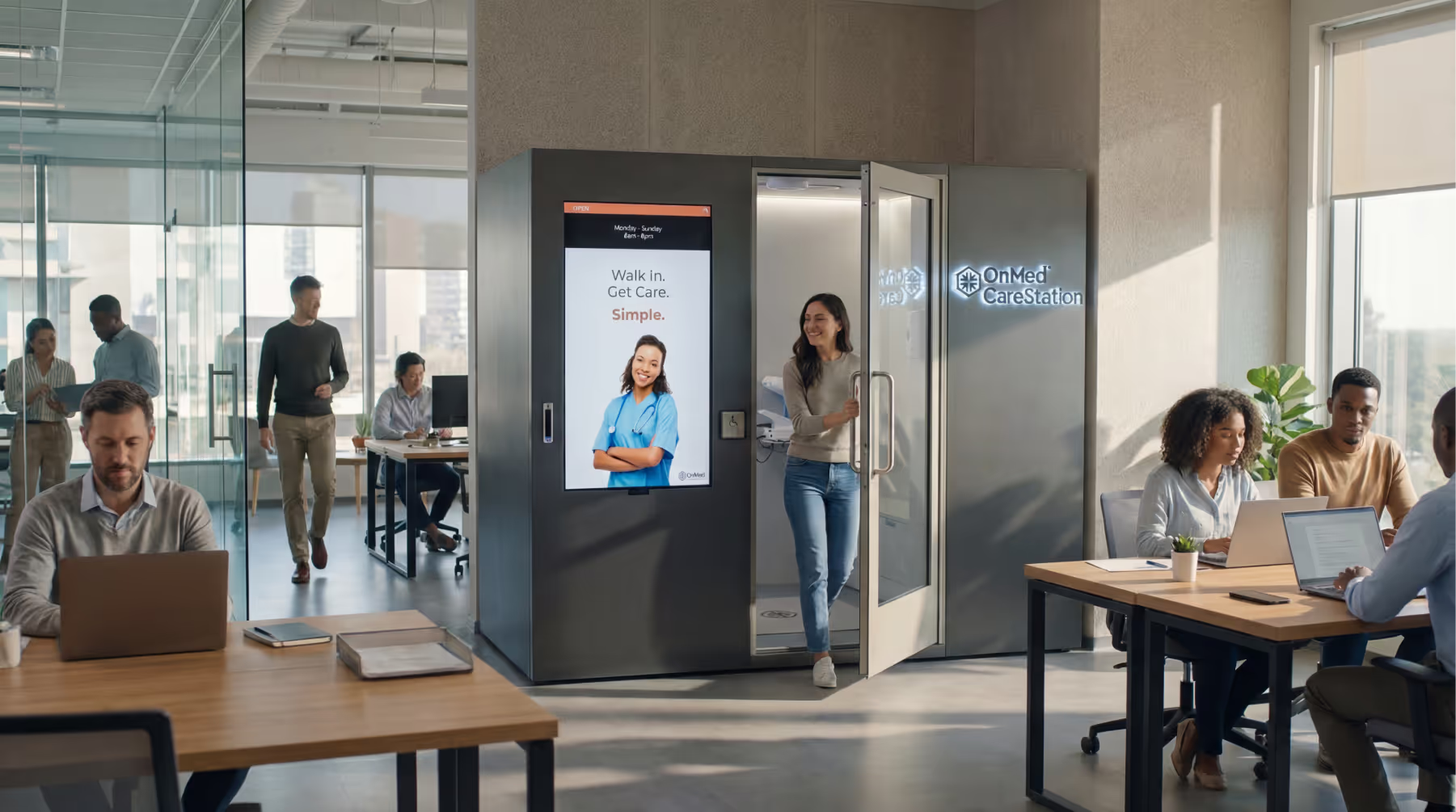
By combining real-time clinician interaction with integrated diagnostic tools in a physical environment, it enables patients to complete everyday care in a single experience—86% of conditions resolved on-site without specialist referral. It reduces avoidable emergency visits, extends clinical capacity, and closes the gap between access and care in a way traditional models cannot. No appointment, no wait.
It's tech-enabled, AI-powered and always human-delivered. Deployed in 45 days or less, with no construction or staffing challenges, the CareStation is game-changing.
Across every trend, the pattern is consistent. Access may be expanding, but the ability to deliver care in real time is not keeping pace.
Cost pressure is increasing. Chronic disease is driving demand. Specialty treatments are raising the cost of care. Mental health is expanding utilization. Care delivery is becoming more distributed without becoming fully connected. Technology is advancing, but its value depends on how it is integrated.
Organizations are responding. They are consolidating vendors, demanding measurable ROI, and shifting toward models that reward outcomes rather than access alone.
Healthcare will continue to evolve. But its performance will ultimately be measured by something much simpler.
Whether it can deliver care in the moment it is needed.
Learn more about how OnMed is transforming how the world accesses healthcare with the patented OnMed CareStation™ at onmed.com.
Access to healthcare in the United States is not a single problem with a single solution. For the 120 million Americans living without reliable access, the barriers are structural and compounding—distance from care, inability to afford coverage, gaps in insurance, and a fragmented system that demands significant navigation before anyone receives treatment.
A healthcare desert is a geographic area where residents face significant barriers to accessing basic medical care due to a shortage of providers, facilities, or both. Today, 80% of U.S. counties meet the criteria for a healthcare desert, leaving millions of Americans more than an hour from the nearest clinic or hospital. These areas are not limited to rural communities. They include urban and suburban neighborhoods, tribal lands, and correctional environments where structural gaps in the system have persisted for decades. The consequences are measurable: delayed diagnoses, undertreated chronic conditions, and emergency departments absorbing care that should have been delivered much earlier.
Hybrid healthcare combines physical environments, real-time clinician interaction, and integrated diagnostic tools into a single, coordinated healthcare experience. Rather than directing patients through a series of disconnected touchpoints—a virtual visit that leads to an in-person referral that leads to a specialist—hybrid care is designed to resolve conditions in one place, in one encounter. It is gaining traction because the existing model does not scale. With up to 124,000 physician shortages projected by 2036, average wait times running 31 to 90 days, and 80% of counties functioning as healthcare deserts, organizations are no longer evaluating care delivery on access alone.
Employer healthcare costs are projected to increase 8–9% in 2026—one of the highest growth rates in over a decade. The traditional response has been to manage plans, renegotiate rates, or add point solutions. None of these address the upstream cause: when employees cannot access care quickly, conditions progress. Unmanaged chronic conditions escalate to emergencies at a rate of 50%, and emergency departments cost 12 times more than alternative care settings. On-site healthcare removes the friction that drives that delay. When care is available where employees already are—without appointments, without commutes, without coverage navigation—conditions are treated earlier, claims costs decrease, and absenteeism declines. Cost control, in this model, is a function of access speed.
The OnMed CareStation is an 8x10 foot "Clinic-in-a-Box", and better than a traditional telehealth kiosk, because it combines real-time clinician access with an integrated suite of diagnostic tools, allowing patients to be evaluated, diagnosed, and treated on-site for the full range of everyday care needs. Because the CareStation places both the clinical interaction and the diagnostic capability in the same environment, 86% of conditions are resolved without requiring a specialist referral. There is no appointment required and no wait. The CareStation is deployed in 45 days or less without construction or additional staffing, making it a practical solution for employers, health systems, universities, and communities that need to extend care capacity quickly and measurably.
Sources
Follow along as we continue to redefine the healthcare landscape and bring the OnMed CareStation to communities across the U.S.